Healthy Mind, Healthy Life
Welcome to Healthy Mind By Avik ™ - ”Healthy Mind, Healthy Life”, a podcast that explores the connection between mental health and overall well-being. Join us each week as we delve into topics related to positive psychology, mindfulness, and personal development, and provide practical tips and strategies for cultivating a healthy and balanced mind.
Want to be a guest on Healthy Mind, Healthy Life? Send Avik a message on PodMatch, here: https://www.podmatch.com/hostdetailpreview/avik
Healthy Mind, Healthy Life
If You Keep Asking “Is It Me?” You May Be Living With Coercive Control, with Carine Van Hee
Use Left/Right to seek, Home/End to jump to start or end. Hold shift to jump forward or backward.
🛟 A Note Before You Listen
This episode contains honest discussion of emotional abuse, toxic relationships, mental manipulation, and the experience of leaving an abusive partner. Some parts may feel close to home, especially if you are currently in, or recently out of, a difficult relationship.
If you find yourself overwhelmed at any point, please pause the episode. You are not alone, and you don't have to figure everything out today. Reaching out for support, even when you're still unsure of what you're going through, is one of the bravest things you can do.
The helplines below are free, confidential, and available to anyone seeking clarity, safety, or someone to listen.
International:
- Find a Helpline (every country): https://findahelpline.com
- International Association for Suicide Prevention: https://www.iasp.info/crisis-centres-helplines
If you are in immediate danger, please contact your local emergency services. Your safety matters more than any conversation, podcast, or post.
That sickening loop of “Is it me?” can feel like a personality flaw, but it can also be your nervous system trying to tell you the truth. I sit down with artist, author, and advocate Carine Van Hee to name what so many people struggle to describe: emotional abuse that doesn’t leave bruises, yet still reshapes your mind, body, and sense of self. Carine’s work with the Family Justice Center Alliance and her book, *Is It Me? The Hidden System Behind Toxic Relationships*, bring language to experiences that are often dismissed as “complicated” or “just a rough patch.”
We talk about why emotional and mental abuse is so hard to prove, how an abusive partner can look charming and credible in public while acting completely different at home, and why that “mask” causes friends, family, and even professionals to misread abuse as ordinary conflict. Carine explains the key distinction: conflict has equality and shared power, while abuse runs on imbalance, control, and fear. We also dig into the lived reality of the cycle of abuse, the push-pull of affection and cruelty, the exhaustion of tiptoeing, and how constant unpredictability can lead to trauma symptoms, including PTSD.
If you’re still quiet about what’s happening, we discuss safer next steps: talking to someone trained in coercive control and narcissistic abuse, using local support centres or helplines where available, and taking extra care when planning to leave. If this conversation helps you put words to your experience, subscribe, share it with someone who needs it, and leave a review so more people can find support sooner.
Website: https://www.carinevanhee.com/
Email: carine@carinevanhee.be
Book: Is It Me? The Hidden System Behind Toxic Relationships
Fit, Healthy & Happy PodcastWelcome to the Fit, Healthy and Happy Podcast hosted by Josh and Kyle from Colossus...
Listen on: Apple Podcasts Spotify
Towards Wellness CoachingOffer: 25% off | Code: POD2026. Available internationally in paperback and eBook formats.
Avita Yoga
Free Avita Yoga class and exclusive interview with Jeff: Know Your Constitution
Couples Tantra Programme
Unlock Deeper Connection and Intimate Pleasure in Your Relationship.
YouEx
Get 50% off the first 6 months of YouEx.ai!
Immunology Diagnostics
30% off of IMBXX. Code: Healthymind Get the test, insurance covers.
Royal Oasis Psychotherapy Institute
Free for life, and no code needed. Download now, and start changing your life today!
Friending, Inc
Offer: 15% off our coffee as stated above | Code: Podcast10 Find friends in real-life in a verified
Jumppoint Consulting
Offer: 30% Subscription | Join COO and author Chelsea Byers for her weekly newsletter.
Disclaimer: This post contains affiliate links. If you make a purchase, I may receive a commission at no extra cost to you.
Want to Be a Guest on Healthy Mind, Healthy Life? 👉 DM me on PodMatch
💬 Want to come on the show? Be a Guest
🌐 Explore the full network | 📨 Newsletter | 👥 LinkedIn Community
This isn't self-help. It's self-honesty.
💼 Sponsor Our Show | 🎬 Check Our Services
📌 Disclaimer This episode is for educational and informational purposes only. Guest views are personal and do not represent the host or Healthy Mind by Avik™. The Network does not verify or endorse guest statements. Nothing here is medical, legal, financial, or professional advice, please consult a qualified professional. Engage critically. Third-party content referenced under fair use. Guests are responsible for their own statements. Concerns? Contact us | Full disclaimer.
By listening, you accept this disclaimer in full.
When Something Feels Deeply Wrong
SPEAKER_00You're standing in the middle of a relationship and something feels deeply wrong. But you cannot name it. You keep asking yourself, is it me? Am I being too sensitive? Maybe maybe I'm imagining this. That quiet confusion, that space between doubting yourself and reaching out for help. That space is is not emptiness. It is where a lot of harm quietly lives. And today we are going to talk about what it re what is really happening inside that space.
Meet Karin And Her Mission
SPEAKER_00And today's guest listeners is someone whose work sits right at the intersection of the lived experience and awareness. So she's an artist, author, speaker who uses her own personal story and creative work to shine a light on emotional manipulation and toxic relationships. She's also a voice for the Family Justice Center Alliance in Europe. And her book, Is It Me? is built to help people understand what they are going through before they even have the words for it. So, listeners, let's welcome Karin Van He. Karin, I'm so glad, so honored you're here with us today.
SPEAKER_01Hi, Sana. I'm so honored to be on this show and I'm so looking forward to this conversation.
SPEAKER_00Thank you so much, Corinne. Thank you. Okay, Karin, before we get into the depth of all this, I would want to start somewhere personal because you have done something that takes real courage. You took your own experience of abusive relationships and turned it into something that could hold space for others, and that is not an easy, easy task. I mean, it's it's not easy. What was the moment, or you know, maybe just the feeling that made you decide that your story needed to become something bigger?
A Mother’s Secret And A Late Realisation
SPEAKER_01Ooh, you're going deep right from the start. When I was in a toxic relationship, like over 20 years ago, I had no clue. I had no role model, I had no manual, I had no words for it. I didn't understand even that I had been in a toxic relationship. What happened in 2023? So that's fast forward now because it happened all in the in the 2000s. In 2023, my mum died, and then she was nearly 92, and I so many things, so many strange things happened around her death. And then I discovered that maybe she didn't have such a huge, wonderful life. And I started to dig deeper into the matter of narcissistic abuse, toxic relationships, all that kind of stuff. And then I discovered that she had been in an abusive relationship, mentally abusive relationship for over 60 years, and me, as her child, had never noticed it. She must have felt so alone. But not only that, because of the fact that I understood that she had been in a system, I looked at my own life, and for the very first time I understood that I had been in a toxic relationship myself. And that was like the biggest aha moment of my life. And then I thought there are others out there who victims, survivors of abuse, mentally mental abuse, that do not know they are in a toxic environment, a toxic relationship. They should know about the hidden system behind toxic relationships so they can make a different decision. They can get out and they can feel that it's not them. They're just a healthy person in a healthy relationship. They're not broken at all.
SPEAKER_00Yes, yes. Well, I mean, especially realizing that, you know, 60 years, your own mother in emotionally mentally abusive relationship. I mean that must be that must be heartbreaking. Yeah.
Why Emotional Abuse Is Dismissed
SPEAKER_00But but one thing which I I would like to, you know, this is something that I feel is a bit of strange, you know, especially when it comes to approaching toxicity in in real relationships. And and this is kind of a taboo taboo, you know, when it comes to mental health, emotional health, that it is not visible externally.
SPEAKER_01No. It's not. No, absolutely not. It's it's invisible, yeah.
SPEAKER_00And and and it it can sometimes, you know, because people can ask, okay, where's the proof? How I mean, it's it's ridiculous, but still, you know, because it's not visible, that means you're just kind of, you know, either thinking, overthinking, or analyzing this too much, or you are taking it wrongly. I mean, you know, it's not approached from the same, you know, seriousness or gravity as physically abusive relationships or or you know domestic violence. And I'm I'm taking some heavy names, so but but you know, they are not taken if it's not taken from that same approach. Why, why do you think, Karina, what can be done for that? I I know it's a difficult question, but what can be done so that you know at least we can give the same or more seriousness towards mentally, emotionally abusive relationships as well, because you know it's not, it doesn't mean that if it's not visible, it it doesn't matter.
PTSD, Masks, And The Cost Of Invisibility
SPEAKER_01I think you're having a you're touching upon a very difficult and very important question here. What I hear about what I hear almost all the time is that Karen, mentally abusive relationships are not that harmful, it's only words. What we don't understand in society, and I didn't understand it myself, I had to experience this first, is that the impact that toxic relations have on your mental health, and that's why I'm so happy to be on your podcast because it's about mental health. The impact on your mental health is so big, it's huge. And I speak to a lot of survivors about their stories, they come and tell their stories, and so many have been diagnosed with PTSD, post-traumatic stress disorder. That's the same disorder as soldiers coming back from war zones. So the impact on your mental health is huge. But once you're in the relationship, nobody sees it because what's happening is that toxic people and healthy people will show themselves without the mask within the four walls that you call home. The moment they're leaving home, they will not take off their mask any longer. So there's a huge difference between how people outside the house see the oppressor and how you come to understand that this person has different kinds, different sides of him or her. So it's very invisible to the outside world. So that's why I think it's really important that we raise awareness, that we increase the knowledge about the hidden system, that we talk about the different components of that system, which is layered and complex. But once you see it, you can recognize it. And once you can recognize it, you can take a different choice. And recognition of the system is important, not only for the victims and the survivors, but also for the people who need to support the victims and the survivors, like police, the court, the family system, the social workers, the the whole surroundings that normally should support the survivor, now support the oppressor because they don't understand the system behind it. And that's that's why I decided now I have to get out. And this the strange thing is what's happening when you understand that it's a system. As a survivor myself, I don't feel shame anymore to talk about it because I know now what happened. I have answers to all my questions, questions that have been running around for 20 years, ruminating in my head, thinking it was me. And now I have these answers. So now I can also explain to people better that why it's unhealthy, how that system works, how you feel as a survivor when you're in it, so that people can resonate with what's happening.
SPEAKER_00Absolutely, absolutely. That is why it is more and more important to talk, especially around mental health, emotional abusive relationships, toxic relationships, which are affecting you mentally as well, because this particular thing that you know sometimes even it's it's difficult to even realize that you are in there, and then the the systems around you, the people around you, they wouldn't even recognize that that's one of the honestly, it's one of the worst, worst things. And yes, uh this there there is a word that comes up often in these conversations, abuse. But a lot of people, especially those inside the relationship, probably they would not use that word to describe what is happening to them. You know, they might say, Yeah, we fight a lot, or yeah, things are complicated. It's it's it's complicated. And I can I can I kind of agree with this question because of my own lived experiences as well. I'm I'm curious, Tereen, in your understanding, what is the real difference between a conflict and abuse? How you tell them apart?
SPEAKER_01Yeah, I I um
The Hidden System Others Don’t See
SPEAKER_01you you phrase it so well because when you're in a toxic relationship, you I didn't call my relationship abusive. I didn't call my relationship I was in toxic. I thought we perhaps were not a good fit, and that perhaps it's my fault, I'm probably overreacting, I'm too emotional. Everyone argues sometimes, he's just stressed, uh, it's not really who he is. All relationships has have ups and ups and downs. And then you you think of then you you you consider yourself lucky when things are going well, and then it's a push and pull all the time, so it's uh it's a cycle of abuse, and it's abuse, it's not a conflict. When you're in a conflict with somebody, then you have the same power. There's equality. Partners are equal sitting around the table trying to solve the issue between them without pointing at each other. In abusive relationships, there's a difference in power. One has all the power, the other one is powerless. There's no equality whatsoever. One will lash out, the other one will try to put everything back into harmony. One is there to uh not to solve the problem, but to get it worse, to make it worse, and the other one is gonna try to make things worse, especially when there are kids in the relationship. So there's a difference in how it feels and how the power is being used on you. It's one is the oppressor and the other one is the victim. So there's a disbalance in power and in control, and it doesn't feel free or a safe space any longer. It's not the conflict, this is abuse. So it's a it's a huge word, and it's something that I didn't use for a very long time, but I think we should call it as it is. It is abuse, yeah.
SPEAKER_00Yes, it is, and I really, really appreciate because
Conflict Versus Abuse And Power
SPEAKER_00you know, this is such such an important distinction, Karim, and and the language itself it becomes part of the system because calling it conflict, it keeps it in a space where you know, as you described, both people are equally responsible. And that framing, it I I believe it can quietly keep someone from seeing the full picture.
SPEAKER_01Yes. And not only the the the victim or the survivor of abuse, but everybody around. Because what I hear so many times is that social workers with all the best at heart will advise victims, go back home and talk to him. Because I've talked to him before, he's a lovely human being, he will understand because they come from a point of this is a conflict. No, it's not a conflict, it's abuse. It's being talked down to, it's being treated with silence, it's being lashed out at, it's being it's horrendous and nobody sees it. So that the invisibility is really the difficult thing about toxic relationships.
SPEAKER_00It is, it is, and more than that, also there's another aspect also that and and especially you know when when there is also the the the dynamics of having having kids, having a family in the scenario, most of the times the victim wouldn't even share anything with anyone outside. Because you know, they they feel like if I I share it, it would it can make things worse. Or they wouldn't even bother because you know now their their body has has started to you know cope accordingly and accept it as normal and it wouldn't do anything because you know uh they would feel like okay, uh let's let's do not let's not create anything unpleasant. Let's just stay quiet. And uh it it can it can become you know very, very it can you know feel like this is the only way of of the
Mind Hijacking And Losing Your Gut
SPEAKER_00life there is there's no other way out there, yeah.
SPEAKER_01Yeah, but it's it's true what you say, and uh because of the fact your mind is being hijacked in a toxic relationship. You don't know what you what is right or what is wrong any longer because of the hijacking and because of the system. So we all know about the love bombing phase and then the isolation, but we don't know we we talk about all these words, but what is it what do they mean actually? If you have never been in a toxic relationship, it's difficult to understand how people can isolate you. But what I say is all the time is educate yourself about the toxic system, try to understand how it works, but also feel in your body because if you're a victim, if you're in that situation right now, you will feel confused, your situation is unpredictable. This means that you're gonna tiptoe a lot, walking on actions, trying to anticipate what is coming. So trying to keep harmony, as you just said, you're gonna be tired a lot because you're tiptoeing all the time and it's unpredictable. You're gonna be ruminating, you're gonna be in your head, replaying conversations because these conversations just go over all over the place, and you're always wrong, and it's gonna erode your self-worth. So it's to hijack your mind,
How The Cycle Warps Everyday Life
SPEAKER_01and at the end you just don't know who you are anymore.
SPEAKER_00And that brings me to the to the next, you know, part of something that you mentioned in your work is this idea of a hidden system behind toxic relationships, and and the title of your book, it really holds that. And and I I actually want to bring that down to the everyday level, Karim. What does living inside that system actually look like on an ordinary any day? You know, not the dramatic moments, but just the routine ways it shapes someone's day.
(Cont.) How The Cycle Warps Everyday Life
SPEAKER_01Ooh. My mind goes all over the place now because in a in an abusive relationship, which starts loveling, lovely, lovely, and I had when I got to know this wonderful human being for the very first time, I really thought I found gold on the streets. I was like, this is wonderful. And then you start together, and then things happen and and you don't know really what's going on. But the cycle of abuse makes it really, really difficult to understand that you're in it because you have really beautiful moments. You have moments where you feel loved and seen and and heard and listened to, and then you have other moments where you feel like there's there's so much duality, there's so much uh black and white situations, and you feel like his love turned into hate, and you don't understand. You don't you try to pinpoint where it started, you can't. You can't you can't you cannot find the dumb moment where it went wrong, and this makes it so confusing. So an everyday life can be just beautiful. You wake up, you have coffee together, it's wonderful, it's nice, it all works out perfectly, and then three weeks later, something might happen and he just explodes, and you don't know why, you don't know the reason behind this behavior. Because it's it's and when you talk about it later, it's your it's your fault, and it it shifts from being a normal relationship. That's why it's so difficult to understand. It shifts from being a normal relationship, it shifts gradually to becoming something which is a bit strange, and you ask yourself, what the heck just happened here? And what did it really mean what he said, or is it just me to a place where you're rock bottom and you don't even know who you are anymore? You just think I remember that I heard my own, I heard voices in my head. This is not normal, this is not normal. Karen, you should leave. And and you don't believe your own voices in your head anymore. You're just lost. And when you're in a toxic relationship, you're in your head all the time, and that's where they want you to be, because then you they can confuse you, they can hijack your mind, and we we lose the connection with our body, we lose the connection with our gut feeling, our navigational system, which knows that this is wrong, but we're disconnected, and that's what they isolate you from family and friends, but they isolate you from your body as well, you don't feel it anymore. So, what is a one one day out of a toxic relationship? It could be everything from really wonderful to really awful.
SPEAKER_00And and I mean, the most striking about that is you know, from the outside, and this is something we actually touched in the beginning itself, Karim, that it none of it looks alarming, you know, it can even look like devotion or care. You know, we we talk about especially for women who are navigating family with the toxic relationships, that oh, she takes such good care of her family, she never let anything happen, and you know, she she holds it all together very well. And and I mean, it's it's often it tends to get often misread and you know perceived as a kind of you know a characteristic trait of a good homemaker, of a good woman, of that it's kind of taken as a ball of honor in in many societies. And that is something which I really, really find, you know, very striking.
SPEAKER_01It's not
Go Slow And Beware The Smear Story
SPEAKER_01an easy topic. It's not easy to make the invisible system visible to everybody, and I keep on inspiring all people when you meet somebody and you feel and you get that I'm I'm not sure here. Take your time, take your time to move into that relationship, whether it's a friend, whether it's a parent, a sibling, a colleague at work. If you if people are pressuring you to move quickly, to to if you feel pressured, go slow. Go slow is the best advice I can ever give to anybody if you doubt. And if you're like a witness to something that you're not sure, talk to both parties, don't talk to one. I what I discovered when I was in the abusive relationship is that people that the oppressor started to spread around stories about me which were not true, and most of the people took debate. And I was so surprised. So I le I left, when I left that relationship, I was only left with a few with hand. Full of people that were still believing in me. All the rest just turned away. So it's it's so invisible, it's so difficult to get to get to understand, even if your the bet your best your best friend could not even understand you any longer. So it's good that we talk about the the different components of social relationship and then it's getting highlighted that it's so invisible and that you you might be supporting the wrong partner in a toxic relationship. That's what's happening a lot. Also by social workers and experts in the field.
SPEAKER_00Absolutely, absolutely. And I know Green, we are we are short on time, but I think this is such an important question. For anyone who is listening right now, who is still in that space of asking that, is it me? Someone who has not told anyone yet, who is carrying this quietly, maybe even feeling a little ashamed or
Get Expert Help And Leave Safely
SPEAKER_00confused. What do you want them to know in this moment?
SPEAKER_01The moment you doubt, the moment you feel, oh my god, what just happened? Is it me? Please go and look for help. Perhaps not my family and friends because they will not understand, because they only see the oppressor with the mask on. You're the only one who saw the oppressor without the mask. So go and talk to somebody that knows about toxic relationships, about narcissistic abuse, go and talk with a therapist. I know that many countries have centers where you can actually go and talk for free. Check whether what you feel, what you are doubting about, check that with somebody else so that you don't feel alone anymore and you you can have some support. Know when you're thinking of leaving that that's that might be the most dangerous situation ever, because even if you have only been in a mentally abusive relationship, it can turn into physical really quickly. So if you're starting off making your way out of the relationship, make sure that you're not alone anymore. If you have to go back or you have to go back into the house or collect some things, do always do that with somebody else. It's something that has been talked about in public by experts that postmental abuse is a serious problem. So don't take it lightly. That's something I would like to say. And if you have a good friend that that really supports you, that believes your story, or hold on to that person because she or he is like the best friend you will ever have. Yeah.
SPEAKER_00Oh yeah, it is, it is. That is something definitely to uh at least look up to in the most turbulent times.
SPEAKER_01Oh, absolutely.
SPEAKER_00And Kareem, before we we close
Where To Find Karin And Final Support
SPEAKER_00this conversation, so many people listening today, they are going to want to find you, read your book, and continue this conversation. Because this is not just a 30 minutes of of conversation. Where where can they uh come find you and your work? Oh, thank you.
SPEAKER_01I want everybody to know that you're not broken. So if you have any questions, if you're not sure, you can always email me. I'm gonna reply to all the emails I I receive. My email is Karen at Karenvanhee.be for Belgium, P E. And I have a website, Karina Karenvanhee.com. You will find all the information there as well, and information about the book Is It Me, the Hidden System Behind Toxic Relationships. I think connecting as survivors or as victims is the main thing we can do. Being there for each other because we understand and we can take it from there. So don't worry, uh, just write to me.
SPEAKER_00Beautiful, beautiful. And yes, listeners, uh, I'll I'll have uh all the links mentioned in the show notes. And uh before we close today, I want to take a moment to speak directly to anyone who may be in a situation that feels unsafe, confusing, or overwhelming right now. If anything in today's conversation felt a little too close to home, just as Karine said, yes, please know that you do not have to sit with that alone. There are people trained specifically to listen without judgment, without pressure, without requiring you to have everything figured out before you reach out. And yes, as as Karine, you mentioned, in many countries, emotional abuse helplines, domestic violence are available around the clock. So for reference, we will definitely mention uh some of them in in the show notes. But please, please, and and and if you are not in crisis, but you are just trying to understand what you are going through, that is valid too. Reaching out when you are still unsure, it's not an overreaction. It is actually one of the bravest things you can do. So, yes, you deserve support, you deserve clarity, and you deserve to feel safe. And Karim, thank you so, so much genuinely for the courage it takes to turn your experience into something that holds space for others.
SPEAKER_01Thank you. Oh, thank you for this wonderful uh conversation and for holding space for me because it's not easy to talk about these deep convers uh these deep insights and and share from the heart, but you make it so easy. So, yeah, honor to you. I want to honor you and your podcast because yeah, mental health is like so important. So, thank you for doing that.
SPEAKER_00Thank you so much, Sharin. That really, really means a lot. And yes, once again to all of you listeners. Thank you so much for being here. And if this episode felt important to someone in your life as well, do share it. Please share it with them. And this is your host Sana. I'll be back with another conversation like this one. Take good care of yourselves. See you next time. Take care, thank you.

Avik Chakraborty
Host.png)
Nazish
Co-host
Rasmeet
Co-host
Sana
Co-host
Sayan
Co-host.png)
PodHub Studios
EditorPodcasts we love
Check out these other fine podcasts recommended by us, not an algorithm.

BizBlend
Sana and Avik Chakraborty - by Healthy Mind by Avik ™. All rights reserved.
AIBiZ
Avik Chakraborty
The Mindful Living
Avik Chakraborty and Sana
The Mindful Journey
Avik & Sana
Mind Over Masculinity
Avik Chakraborty
Inner Peace, Better Health
Avik Chakraborty
Healing Mindset
Healthy Mind By Avik ™
Mind Over Matter
Diksha
Cosmic Confluence
Avik Chakraborty & Sana
I Awaken
iawaken
Wellness Reimagined
wellnessreimagined
Inner Light
Innite
Sacred Harmony
Avik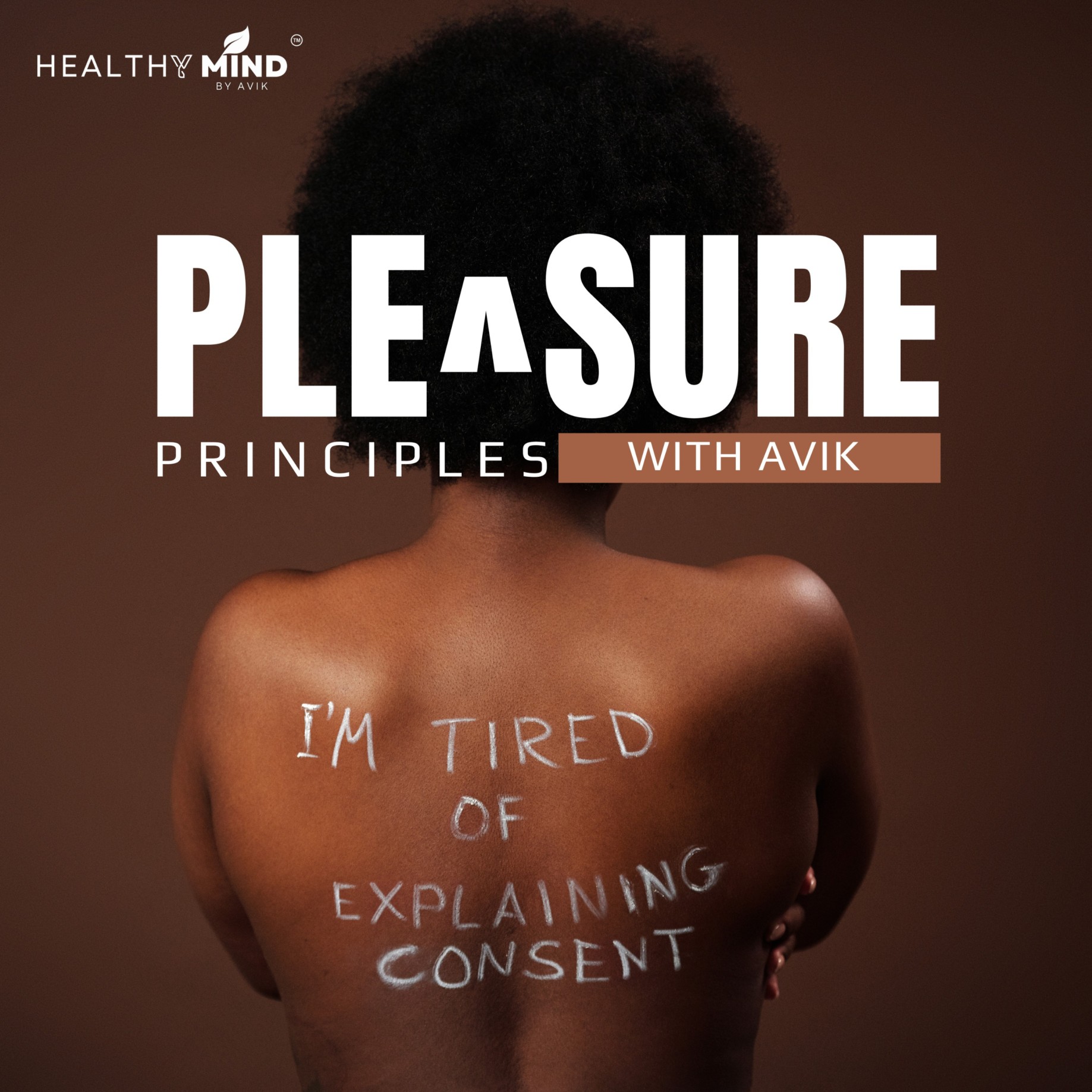
Ple^sure Principles
Avik Chakraborty
Soul Sparks
Spiri
Healing Horizons
Avik